Serving Fort Wayne & Northeast Indiana
Radon Mitigation in Fort Wayne, IN
Got a radon test back over 4.0 pCi/L, or buying a home and the inspector flagged radon? You need a mitigation system installed and a retest that proves it works. We connect Fort Wayne homeowners with local radon pros who do exactly that.
- Radon testing & mitigation
- Local Fort Wayne-area pros
- Fast callbacks, often same day
Radon mitigation lowers the radon gas level in your home, usually with a sub-slab depressurization system: a pipe and fan that pull radon from under the floor and vent it above the roof. Most systems go in within a day. Call or send the form and we'll connect you with a local Fort Wayne radon pro for a free estimate.
Experiencing any of these problems?
Pick the problem you're seeing. Every service below is handled by an independent local contractor we connect you with.
Radon Mitigation
Active sub-slab depressurization systems for homes with basements or slabs.
Learn moreRadon Testing
Short-term and long-term radon tests, including continuous radon monitors.
Learn moreRadon Testing for Home Sales
Fast radon testing during buyer inspection periods, and mitigation before closing.
Learn moreCrawl Space Radon Mitigation
Sub-membrane depressurization with a vapor barrier over the crawl space floor.
Learn moreRadon System Repair & Fan Replacement
Replacing failed radon fans, fixing manometers, resealing and re-testing existing systems.
Learn moreBasement Sealing for Radon
Sealing sump pits, floor cracks and wall joints as part of a radon reduction system.
Learn more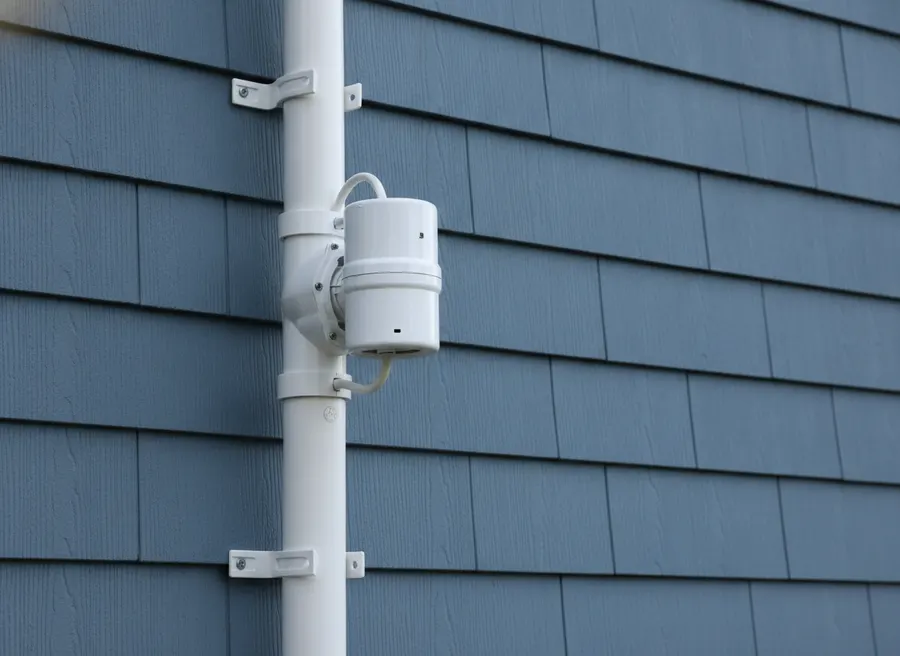
Radon mitigation systems for Fort Wayne homes
The standard fix for high radon is active sub-slab depressurization. The installer drills a hole through the basement floor or slab, digs out a small pit underneath, and connects a PVC pipe to a fan rated for continuous use. The fan creates low pressure under the floor, so soil gas is pulled into the pipe and vented above the roofline instead of seeping into your living space.
A good install also includes sealing the obvious entry points, a manometer (the U-shaped gauge on the pipe) so you can see the system is running, and labels on the pipe. Where the pipe runs, inside through a closet or garage or outside along the wall, is a choice you make with the installer based on looks and cost. After the system runs for at least 24 hours, a new test confirms the level dropped.
- Typical install takes one day
- Fan runs 24/7 and uses about as much power as a light bulb or two
- Manometer lets you check the system at a glance
- Post-install test confirms results
- Works for basements, slab-on-grade and most combinations
Radon testing: know your number first
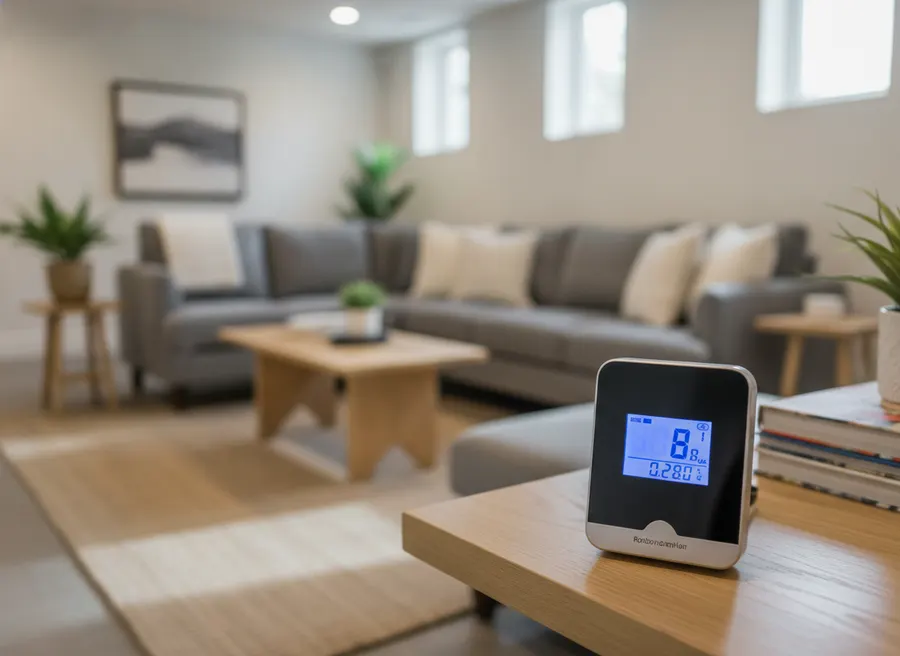
You can't see or smell radon, so the only way to know your level is to test. A short-term test runs 2 to 7 days in the lowest lived-in level of the home, with windows and doors kept closed. A long-term test runs 90 days or more and gives a better picture of your yearly average, since radon rises and falls with weather and seasons.
Professional testing usually uses a continuous radon monitor that records hourly readings. That's useful when you need a fast, defensible result, or when a do-it-yourself kit came back high and you want to confirm it before paying for a system.
- Test the lowest level you live in or could live in
- Closed-house conditions for short-term tests
- Continuous monitors show hourly swings
- Retest after any mitigation or major renovation
Radon during a home sale
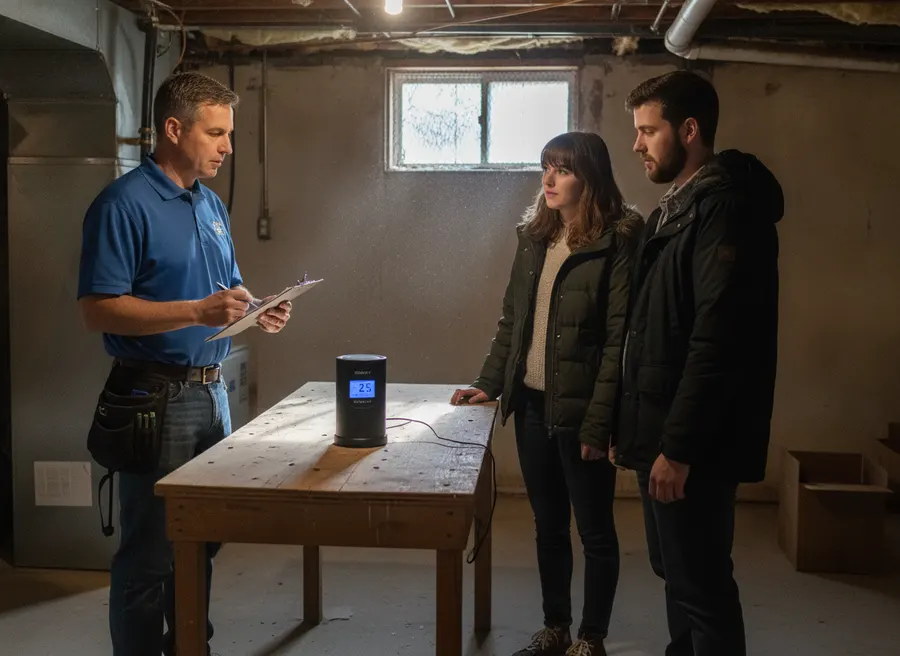
Radon comes up all the time during inspections in the Fort Wayne area. If you're buying, a professional test during your inspection period tells you whether to ask for a mitigation system as part of the deal. If you're selling and the buyer's test came back high, a system installed before closing, with a passing retest, usually keeps the sale on track.
Timing matters here. A short-term test needs at least 48 hours, the install takes about a day, and the retest needs another 24 hours or more of the system running. Getting a pro scheduled quickly is often the hardest part, which is where we help.
- 48-hour minimum test for real estate
- Mitigation can often be done before closing
- Retest report for the buyer's file
- Works with inspection deadlines
Crawl space radon mitigation
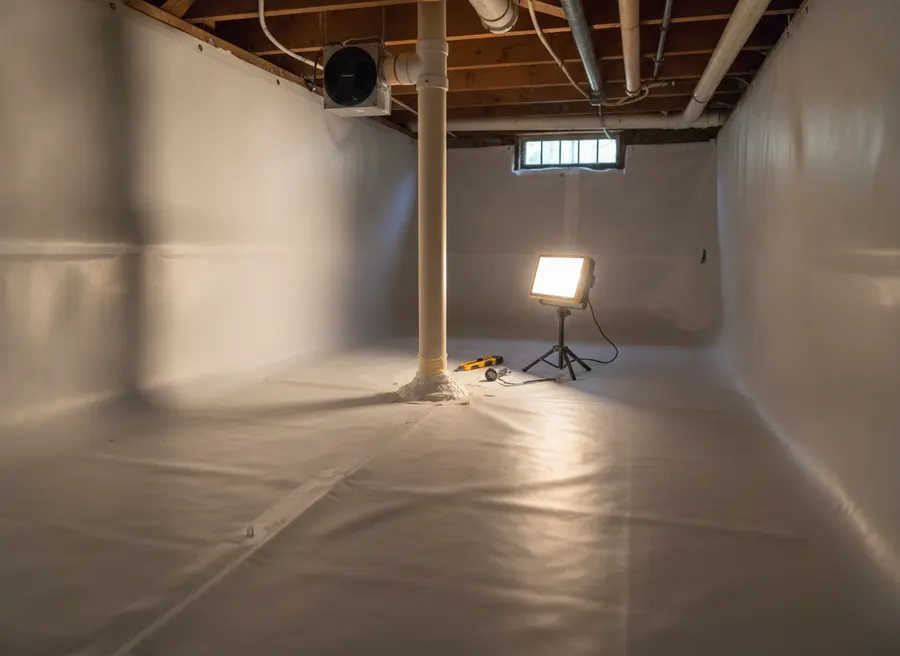
Many older homes around Fort Wayne sit partly or fully over a crawl space. Radon can come straight up out of the dirt floor, so a standard slab system doesn't work by itself. The usual fix is sub-membrane depressurization: a heavy plastic vapor barrier is laid over the crawl space floor and sealed at the seams and walls, and the radon pipe pulls air from under the plastic.
This has a bonus: the vapor barrier also cuts moisture coming up from the ground, which helps with musty smells and humidity. Homes with both a basement and a crawl space often need the two areas tied into one system.
- Sealed vapor barrier over dirt floors
- Pipe and fan pull gas from under the membrane
- Also reduces crawl space moisture
- Can combine with a basement system
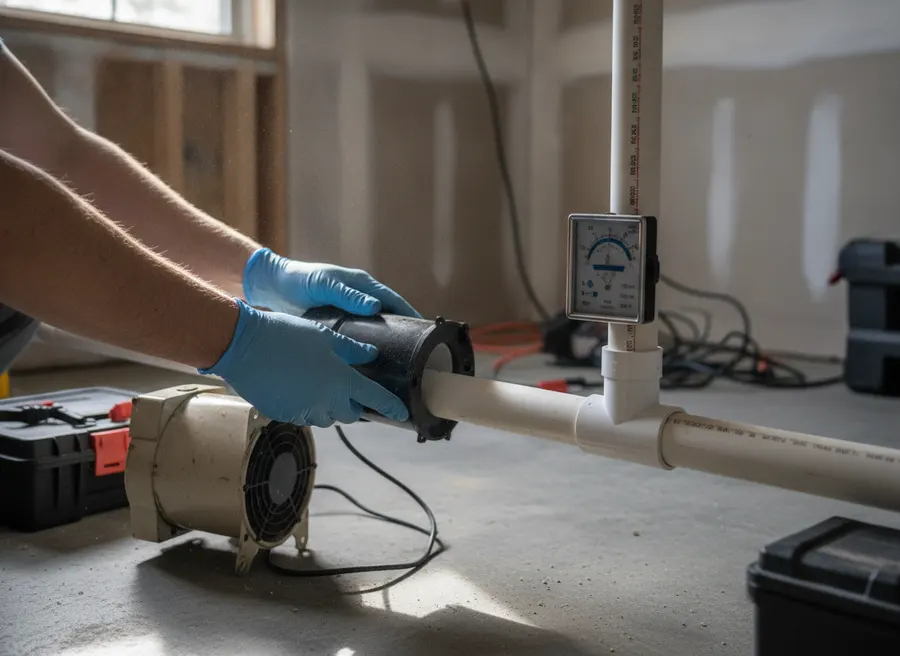
Radon fan replacement and system repair
Radon fans run nonstop, so they don't last forever. If the liquid in your manometer is level on both sides, the fan has likely stopped. Other signs are a new rattling or humming noise, a tripped outlet, or a high reading on a follow-up test.
A local pro can swap the fan, check the pipe for cracks or disconnected joints, reseal the floor, and confirm the system is pulling the right suction. If you bought a house with an old system and no paperwork, a checkup and retest is a smart first step.
- Manometer level on both sides means no suction
- Fan swap usually takes an hour or two
- Pipe, seal and suction check
- Retest after repair
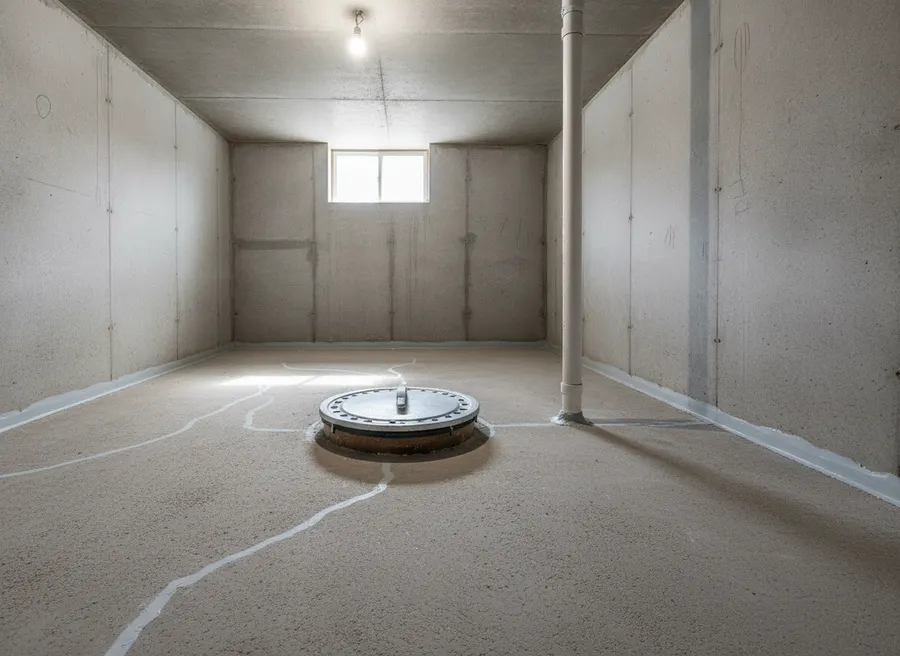
Sealing radon entry points
Sealing alone rarely brings radon down enough, but it makes a mitigation system work better. Common entry points are open sump pits, gaps where the floor meets the wall, cracks in the slab, floor drains, and openings around pipes. A pro will fit an airtight cover on the sump, caulk or foam the gaps and cracks, and make sure the system can build steady suction under the floor.
If your basement takes on water, mention it when you call. The sump cover and any floor drains need to be handled so water still drains while radon stays out.
- Airtight sump pit covers
- Slab cracks and wall joints sealed
- Helps the fan pull more evenly
- Keeps drainage working
When to call a radon pro
- A test result at or above 4.0 pCi/L
- A result between 2 and 4 pCi/L and you want it lower
- Your inspector flagged radon during a home purchase
- Your radon manometer reads level on both sides
- The radon fan is noisy or not running
- You finished a basement or added living space downstairs
- You've never tested and have a basement or crawl space
- A neighbor with a similar house tested high
How much does radon mitigation cost in Fort Wayne?
Price depends on your foundation type, how many separate slabs or crawl spaces need to be tied in, where the pipe can run, and how much sealing is needed. These are broad typical ranges:
| Job | Typical range |
|---|---|
| Do-it-yourself short-term test kit | $15 to $40 |
| Professional radon test (continuous monitor) | $100 to $250 |
| Standard sub-slab mitigation system | $900 to $2,000 |
| Crawl space system with vapor barrier | $1,500 to $3,500+ |
| Radon fan replacement | $300 to $600 |
These are general ranges, not quotes. Your actual price comes from an on-site estimate by the local provider.
How it works
- 1
Call or send the form.
Tell us your radon result if you have one, your town, and whether you have a basement, slab or crawl space.
- 2
We connect you with a local radon pro.
A partner contractor who serves your area calls you to set up a visit.
- 3
On-site estimate.
They look at the foundation, pick the suction point and pipe route, and give you a price.
- 4
Install and retest.
Most systems are installed in a day, then a follow-up test confirms the level dropped.
Why radon is common around Fort Wayne
Radon comes from uranium that naturally breaks down in soil and rock. The EPA's radon zone map puts a large part of Indiana in its highest-potential zone, and northeast Indiana's glacial soils, basements and crawl spaces give the gas plenty of ways in. Two houses on the same street can test very differently, so your neighbor's result doesn't tell you yours.
Winter tends to push indoor readings up: the house is closed, the furnace runs, and warm air rising through the home pulls soil gas in at the bottom. That's why many Fort Wayne homeowners first see a high number on a winter test or during a home sale. The good news is that radon is one of the most fixable problems a house can have. A properly installed system usually brings levels well under the 4.0 pCi/L action level.
Areas we serve
We connect homeowners across Northeast Indiana with local pros.
Frequently asked questions
What radon level needs mitigation?
The EPA recommends fixing your home if radon is 4.0 pCi/L or higher, and suggests considering it between 2 and 4 pCi/L. There's no known safe level of radon, so lower is better. A mitigation system typically brings levels well below 4.
How long does a radon mitigation install take?
Most single-family homes are done in one day. Homes with a crawl space, several slabs, or a long pipe route can take a little longer. You'll want a follow-up test after the system has run at least 24 hours.
Will the radon pipe be visible?
It depends on the route. Pipes can run inside through a closet, garage or utility area and out through the roof, or outside along an exterior wall. Interior routes usually look cleaner but can cost more. Ask the installer to show you both options.
Does the radon fan use a lot of electricity?
No. Radon fans are small inline fans that run continuously. Most draw roughly what one or two household light bulbs do. In winter there's a small heating cost because the system pulls a little conditioned air out from the basement.
Can I test for radon myself?
Yes. Short-term kits from hardware stores work for a first check if you follow the directions closely, including closed-house conditions. For a home sale or to confirm a high result, a professional continuous monitor is usually the better choice.
Do homes without basements need radon testing?
Yes. Radon can enter through slabs and crawl spaces too. Any home in contact with the ground can have elevated radon. Test the lowest level that you live in.
Is radon mitigation required when selling a house in Indiana?
Testing and mitigation are usually negotiated between buyer and seller rather than required across the board, but many buyers ask for a system if the test is high. Check with your real estate agent about how it fits into your contract and deadlines.
Is your service free?
Yes. We're a free referral service. We connect you with an independent local radon provider, who gives you the estimate and does the work. You decide whether to hire them.
Ready for a free estimate?
Tell us what's going on and we'll connect you with a local radon mitigation pro.